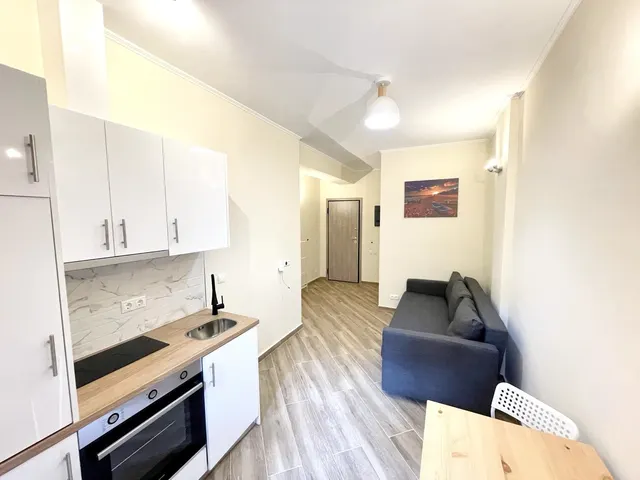
Can an American retire in Greece?
Yes. There is no route that says "retirement" on the paper, but two permits work for someone living on a pension, savings or rental income: the financially independent person (FIP) permit and the Golden Visa. Both are open to US citizens and other non-EU nationals, and neither requires Greek ancestry or a job offer.
Without either permit, a US passport holder can only stay in Greece, and the rest of the Schengen area, for 90 days within any rolling 180-day period. That covers a long holiday or a scouting trip. It does not cover a real retirement, and overstaying it creates immigration problems that follow you into any later permit application. If you plan to retire in Greece rather than visit it, get the permit sorted before the 90 days run out.
Which residence permit fits a retiree: FIP or Golden Visa?
It depends on whether your resources sit in income or in capital. The FIP permit is built for someone with a documented monthly pension or income above a set threshold. The Golden Visa is built for someone willing to put a lump sum into Greek property. Some retirees qualify for both and choose based on other factors, principally whether they want to spend most of the year in Greece or keep the option of renting the place out.
| FIP permit | Golden Visa | |
|---|---|---|
| Basis | Proven income or resources | Property investment |
| Minimum | €3,500/month net (+20% spouse, +15%/child) | €800,000 (Attica, Thessaloniki, Mykonos, Santorini, islands over 3,100 people) or €400,000 elsewhere, or €250,000 for qualifying conversions/restorations |
| Validity | 3 years, renewable | 5 years, renewable while the investment is held |
| Days required in Greece | Meant for living in Greece, long absences can put renewal at risk | No minimum stay |
| Work rights | None, cannot work in Greece | None tied to the permit itself |
| Family | Spouse and children included at higher thresholds | Eligible spouse or partner, children and direct ascendants; individual applications and evidence |
| Letting the property | Not applicable, no property requirement | Check the property’s applicable acquisition regime and use restrictions before planning a tenancy |
If you want to spend most of the year in Greece and your income already clears the threshold, the FIP permit is the more direct route. If you want a property as a base but plan to travel for large parts of the year, or want the letting option, the Golden Visa fits better. Full detail on the investment programme sits in the Golden Visa pillar and the minimum investment breakdown.
What does the FIP permit require in 2026?
It requires at least €3,500 net per month in stable resources, a national type D visa obtained in advance, full health insurance, and no employment in Greece. This is set under the Migration Code (Law 5038/2023, article 163 paragraph 8), with the exact amount fixed by Joint Ministerial Decision 225679/2024 (Government Gazette B' 5223/17.9.2024).
The €3,500 threshold rises by 20% for a spouse and 15% for each child, so a retired couple needs roughly €4,200 net a month between them. You prove it with pension statements, bank deposit records or evidence of other lawful income, assessed monthly if the money arrives periodically (a pension or salary) or annually if it sits as a lump sum in deposits. The permit runs for three years and renews for further three-year periods as long as the resources continue.
Two conditions catch people out. First, the type D national visa has to be obtained from a Greek consulate before you arrive, the permit itself is applied for once you are in Greece, not instead of the visa. Second, health insurance has to be full cover valid in Greece, a travel policy bought for a holiday will not satisfy the requirement.
What is the Golden Visa route for retirees?
It is a residence permit earned through a real estate purchase, with the price set by where the property sits. Under Law 5038/2023 article 100 as amended by Law 5100/2024 (in force from 31 August 2024), the thresholds are €800,000 in the Region of Attica, the Regional Unit of Thessaloniki, Mykonos, Santorini and islands with more than 3,100 inhabitants, and €400,000 in the rest of the country. The €250,000 routes have separate conditions for qualifying changes of use and listed buildings. Do not treat their works deadlines as interchangeable: ask your lawyer to verify the exact property, evidence and applicable timetable before paying a deposit. At the €400,000 and €800,000 tiers the property must be a single unit of at least 120 square metres.
The permit lasts five years and renews as long as the investment is held, and there is no minimum number of days you have to spend in Greece to keep it, which is the main practical difference from the FIP permit. Properties acquired under the current Golden Visa framework are subject to letting and use restrictions. Have the applicable regime checked before relying on rent; legacy or transitional acquisitions need their own review. See the property-route guide for the distinction. Where the money actually goes furthest for this kind of buyer is covered in the best Athens areas for a Golden Visa purchase, and if you are also weighing this against Portugal's programme, see Greece vs Portugal Golden Visa.
How are retirees taxed in Greece?
Foreign pensions can be taxed at a flat 7% for up to 15 years under Greece's special pensioner regime, but only if you meet two conditions beforehand and file the application correctly. This sits in the Income Tax Code (Law 4172/2013, article 5B).
The two conditions: you must not have been a Greek tax resident for five of the six years before you transfer your tax residence to Greece, and you must be moving from a country that has an administrative-cooperation agreement in tax matters with Greece. The United States has tax cooperation arrangements with Greece, so American applicants are not excluded on this ground, but confirm your specific situation with a tax adviser rather than assuming.
Once accepted, the 7% rate applies to all your foreign-source income, not just the pension itself, so dividends, interest and foreign rental income are swept in too. The tax is paid in a single instalment by the last working day of December each year, and that payment settles your Greek tax on that income in full. The regime runs for 15 tax years. Any Greek-source income, such as rent from a Greek property, is taxed separately under the normal rules, not at 7%. The application is filed with the Tax Administration (AADE). Treaty provisions and applicable foreign-tax credits still need to be checked for each income source.
Tax residency is assessed separately from a residence permit or AFM. AADE describes a presence test of more than 183 days across any twelve-month period, with residence starting on the first day of presence. Home and personal or economic ties also matter; the presence test has an exception for certain private-purpose stays. A calendar-year counter alone cannot determine your position. See AADE’s tax-residence criteria and discuss your circumstances with a tax adviser.
For US citizens, living abroad generally does not remove US worldwide-income reporting obligations. Tax credits and treaty treatment depend on the income and circumstances; do not assume the Greek 7% rate is your combined tax bill. See the IRS guidance for Americans abroad.
September 2026 procedure update: AADE decision A.1192/2026, articles 4–5, published on 24 September, separates the tax-residence assessment from the 7% application deadline. Do not wait to pass a day-count threshold before checking that deadline.
| Stage | Current procedure to check with your adviser |
|---|---|
| Year of entry into the regime | A move by 2 July can support the arrival year or the next year; a later move points to the next year. |
| Application | 31 October of the relevant year. |
| Missing supporting documents | Complete the file by 30 November of the application year. |
| Payment | One instalment by the last working day of December. |
The 7% regime does not automatically cover your spouse or override treaty rules. Ask for a separate review of each person and income source.
What does it cost to buy or rent a home as a retiree?
Buying triggers a real estate transfer tax of 3% of the property's taxable value, plus a municipal surcharge of 3% of that tax, under Law 1587/1950 as in force. VAT on new-build homes is currently suspended until 31 December 2026 on the developer's application, so buyers of qualifying new construction pay the transfer tax instead of 24% VAT. Once you own, the annual ENFIA property tax applies regardless of residency, and the detail on how that is calculated and what changed for foreign owners is in the ENFIA guide.
Before any of this, you need an AFM, the Greek tax number. Nothing gets signed, no deed, no lease, without one, and getting it set up is usually one of the first practical steps after arrival, covered in the AFM guide for foreigners. If you rent rather than buy, the lease has to be registered electronically with AADE, and the tenant (you, in this case) also needs an AFM to complete that registration.
A single monthly figure for living costs would mislead, since it depends entirely on lifestyle, city versus island, and whether you rent or own. For a grounded, itemised look at real spending, see the cost of living in Athens guide.
How does healthcare work for a non-EU retiree?
Private health insurance valid in Greece is a condition of both the FIP permit and general permit rules under Law 5038/2023, so it is not optional for a non-EU retiree on either route. A travel insurance policy bought for a short trip will not meet the requirement, you need a genuine health policy that covers medical treatment and hospitalisation while you are resident.
Greece also runs a public healthcare system (ESY) that residents can access, but as a non-EU retiree your day-to-day cover, and your permit compliance, will rest mainly on the private policy. Premiums vary by age, insurer and cover level, so get quotes rather than relying on a headline figure. The practical detail on how the public and private systems fit together, and what to actually shop for in a policy, is in the healthcare guide.
Cost of retiring in Greece: what is fixed and what depends on you
Some costs are set by law and apply to everyone in the same position. Others depend entirely on where you live and how you live.
| Fixed by law or regime | Depends on you |
|---|---|
| Permit application (FIP or Golden Visa) | Rent or mortgage, or purchase price |
| Private health insurance (a permit condition) | Daily living costs, food, transport |
| ENFIA annual property tax (if you own) | Insurance premium level |
| Property transfer tax, 3% plus 3% surcharge (if you buy) | City centre versus island versus suburb |
| 7% flat tax on foreign pension income (if elected) | Whether you let a second property |
For the fixed items where exact current figures matter, the permit costs and timeline page has the application-side detail. For the lifestyle side, the cost of living guide breaks down real spending by category.
A realistic first-year timeline
Plan the residence permit, property arrangements and tax application together. They have separate conditions and deadlines. Ask your advisers to map your arrival date and intended tax year before making commitments; a fixed sequence that waits for 183 days can miss the relevant application window.
- Apply for the type D national visa at a Greek consulate in your home country (FIP route), or begin the property search (Golden Visa route).
- Arrive in Greece and get your AFM, the tax number that unlocks everything else.
- Open a Greek bank account, which most permit and property processes will ask for.
- Secure a home, rented or bought, and register the lease with AADE if renting.
- File the residence permit application (FIP through the Ministry of Migration portal, Golden Visa alongside the property purchase).
- Review tax residence and the intended tax year with your adviser, using travel records and personal circumstances.
- Confirm the 7% application and document deadlines from the current AADE procedure; check the five-of-six-years non-residence condition and foreign pension evidence.
Expect this to run across most of a calendar year rather than a few weeks. Health insurance has to be in place before the permit application, not arranged afterwards.
Retire in Greece and let your property while you are away
If you plan to let a Golden Visa property while abroad, first establish which acquisition regime and letting restrictions apply. Current-regime restrictions make holiday-rental assumptions unsuitable; earlier or transitional cases require individual review. A long-term tenancy also needs to fit your own occupancy plans: a tenant’s rights do not disappear when you want to return for a holiday.
If short-term letting through Airbnb-style platforms was part of your plan regardless of visa status, be aware that new short-term rental registrations in central Athens (the 1st, 2nd and 3rd municipal districts) are suspended until 31 December 2026 under Law 4446/2016 article 111 paragraph 2A and the related joint ministerial decision. The practical implications for an owner are set out in what owners should do about the Athens Airbnb ban.
For a retiree who will genuinely be away part of the year, long-term letting managed properly is the workable route, both for Golden Visa compliance and for actually generating rental income while you are not there. mamaXO finds, buys, lets and manages property for owners in exactly this position, from the initial purchase through to ongoing tenant management, with fees, scope and exclusions set out in the agreed proposal. Details are on the for owners page.
What to do next
Work out which route your finances actually fit, proven monthly income points to the FIP permit, a lump sum available for property points to the Golden Visa. Get the AFM and health insurance sorted before you rely on either timeline moving quickly. If a purchase is part of the plan, whether for your own home or as a Golden Visa investment you might later let long-term, mamaXO sources, buys, lets and manages Athens property for owners who will be away part of the year, with fees, scope and exclusions set out in the agreed proposal. Get in touch for a plan built around your specific numbers and timeline.
About mamaXO
mamaXO is an Athens-based property and Golden Visa operator serving international investors and retirees relocating to Greece. We focus on accurate, source-backed and risk-honest guidance, from the first permit application through to ongoing property management.
This guide is based on the laws cited and is not legal, tax or immigration advice.
Sources
- Law 5038/2023, Migration Code, article 163 par. 8 (financially independent person permit)
- Law 5038/2023 article 100, as amended by Law 5100/2024, in force from 31.8.2024 (Golden Visa thresholds and letting restriction)
- Law 1587/1950, as in force (real estate transfer tax)
- Law 4446/2016 article 111 par. 2A and related joint ministerial decision (Athens short-term letting registration suspension to 31.12.2026)